


Introduction
The first time I tried making a copycat Round Table Pizza Sauce Recipe at home, I honestly didn’t expect much. I figured it would taste like regular canned pizza sauce with extra oregano tossed in.
But after a few test batches, I finally got something that reminded me of those old-school pizza nights where the sauce actually had flavor instead of just tasting sweet and flat.
Growing up, Round Table pizza always stood out because the sauce tasted richer and a little more seasoned than the average takeout pizza. It had that slightly herby, garlicky flavor that soaked into the crust without making it soggy.
I’ve made homemade pizza for years, but sauce was always the part I rushed. I used jarred sauce more times than I want to admit. Some were okay, but most tasted too sugary or weirdly metallic.
What worked better for me was keeping the ingredient list simple and simmering the sauce just long enough to deepen the flavor without cooking it forever.
Now I make this sauce almost every pizza night. Sometimes I even keep extra in the freezer because it’s way easier than buying expensive pizza sauce jars all the time.
And honestly, once you make homemade pizza sauce that actually tastes good, it’s hard to go back.
Why This Recipe Works
There are a few reasons this recipe turns out really close to that classic Round Table flavor.
First, the tomato base uses both tomato sauce and tomato paste. The sauce gives it a smooth texture while the paste adds richness without making it watery.
Second, the seasoning blend matters more than people think. Dried oregano, basil, garlic powder, and onion powder give the sauce that classic pizza shop flavor.
A tiny bit of sugar balances the acidity without making the sauce overly sweet.
I noticed the flavor also improves after sitting for about 30 minutes. The herbs soften and blend into the tomato base better.
And unlike some pizza sauces that need hours of cooking, this one comes together pretty quickly.
Equipment Needed
You don’t need anything fancy for this recipe.
Just basic kitchen tools:
- Medium saucepan
- Wooden spoon or spatula
- Measuring cups
- Measuring spoons
- Knife
- Cutting board
- Small mixing bowl
- Can opener
- Storage container or mason jar
Recipe Card
Round Table Pizza Sauce Recipe Summary
Prep Time: 10 minutes
Cook Time: 20 minutes
Total Time: 30 minutes
Servings: Enough for 3 large pizzas
Cuisine: Italian-American
Course: Sauce / Condiment
Calories: About 45 calories per serving
Ingredients
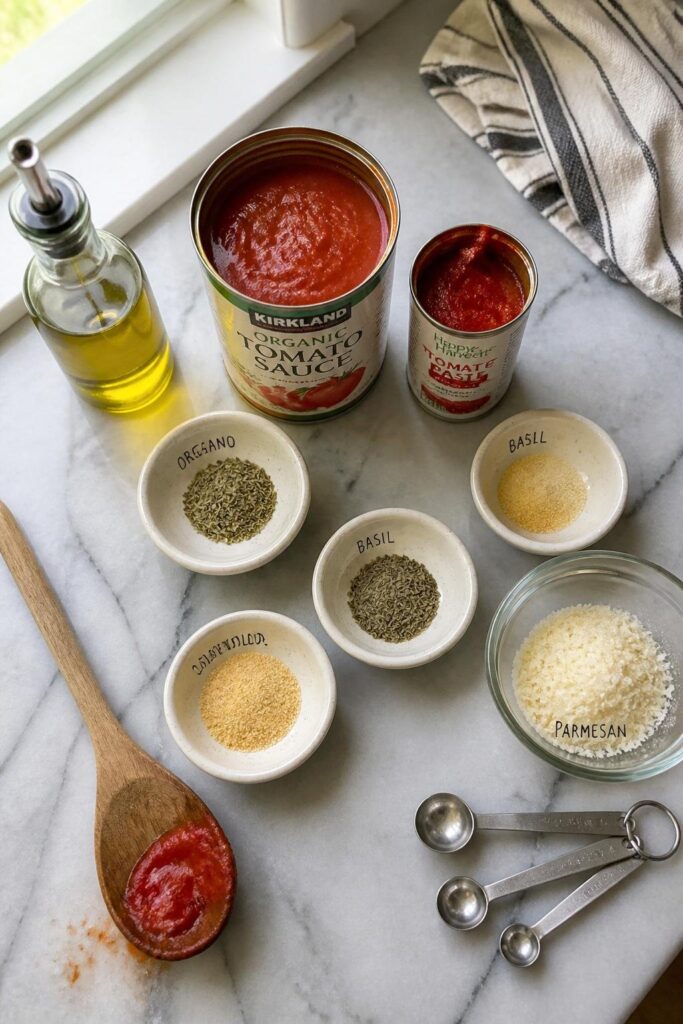
- 1 can (15 oz) tomato sauce
- 1 can (6 oz) tomato paste
- 3/4 cup water
- 2 tablespoons olive oil
- 1 teaspoon garlic powder
- 1 teaspoon onion powder
- 1 teaspoon dried oregano
- 1 teaspoon dried basil
- 1/2 teaspoon dried parsley
- 1/2 teaspoon black pepper
- 1 teaspoon salt
- 1 teaspoon sugar
- 1/4 teaspoon crushed red pepper flakes
- 1 teaspoon grated Parmesan cheese
Step-by-Step Instructions
Step 1: Heat the Olive Oil
Place a medium saucepan over low to medium heat.
Add the olive oil and let it warm for about 30 seconds.
You don’t want it smoking hot.
The first time I rushed this part and burned the seasonings almost immediately, which made the whole sauce taste bitter.
Step 2: Add the Tomato Base
Pour in the tomato sauce and tomato paste.
Add the water and stir until smooth.
At first it’ll look thick and kind of strange, but keep stirring until everything blends together.
The texture should look smooth but still rich.
Step 3: Add the Seasonings
Stir in the garlic powder, onion powder, oregano, basil, parsley, black pepper, salt, sugar, crushed red pepper flakes, and Parmesan cheese.
Mix everything really well so the spices spread evenly.
I noticed that if the tomato paste isn’t fully mixed in, little clumps can hold pockets of seasoning.
Step 4: Simmer the Sauce
Reduce the heat to low.
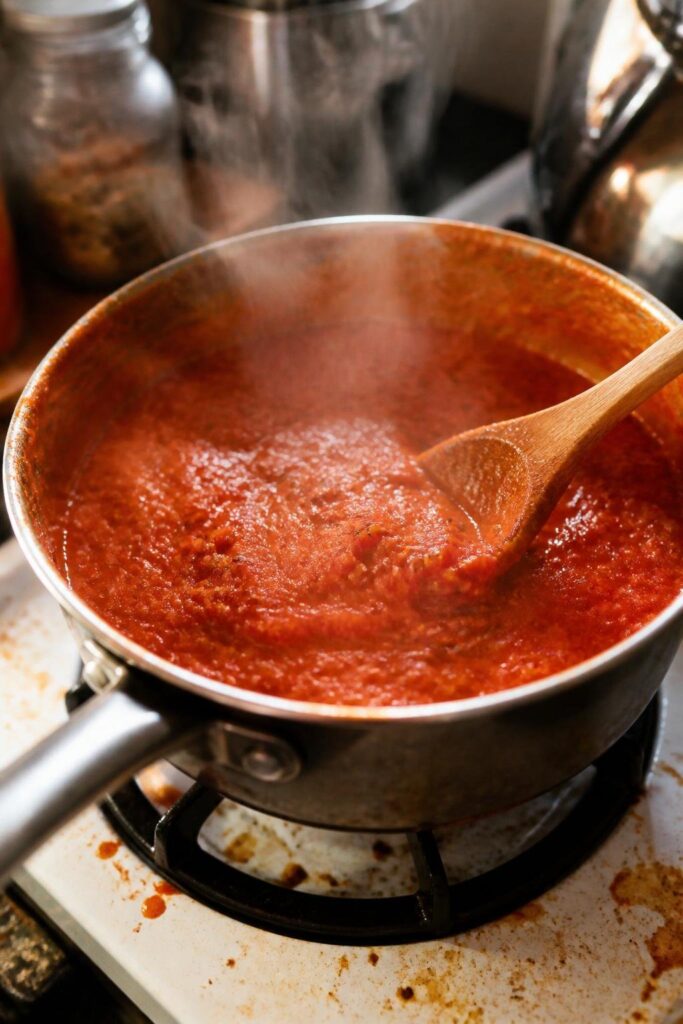
Let the sauce simmer gently for about 15 to 20 minutes.
Stir every few minutes so the bottom doesn’t stick.
The sauce should slowly darken a little and smell more savory as it cooks.
You’ll notice the sharp canned tomato smell starts fading after about 10 minutes.
That’s when it usually starts tasting way better.
Step 5: Taste and Adjust
Taste the sauce carefully.
If it tastes too acidic, add another tiny pinch of sugar.
If you want more spice, add extra red pepper flakes.
Sometimes I add a little extra oregano depending on what pizza toppings I’m using.
Step 6: Cool Before Using
Let the sauce cool for at least 10 to 15 minutes before spreading it on pizza dough.
Warm sauce can make pizza dough softer and harder to work with.
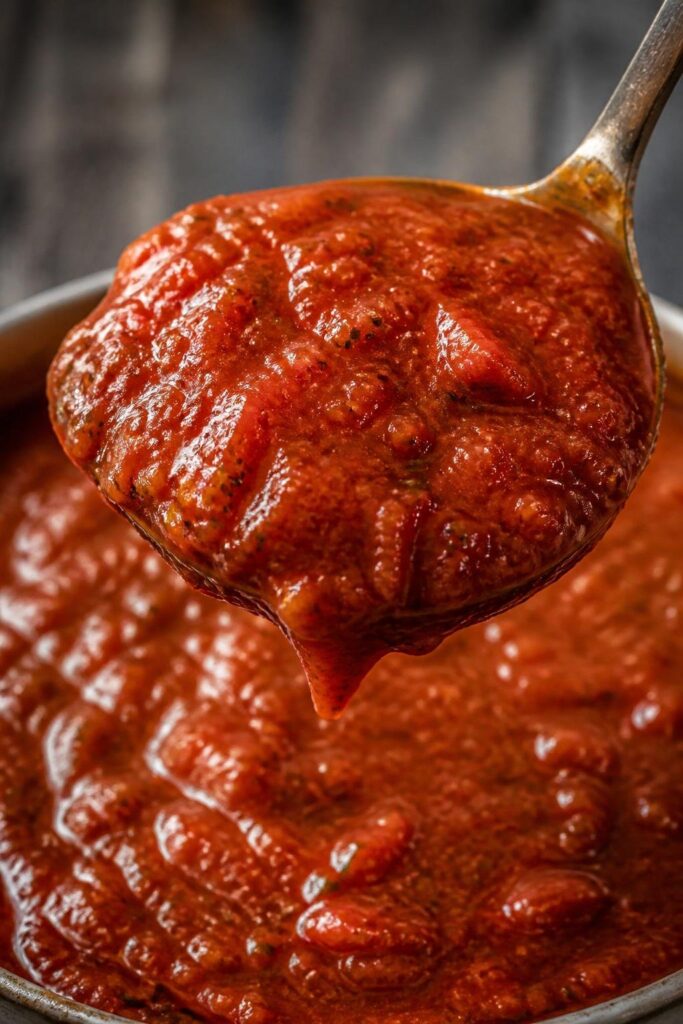
The texture also thickens slightly as it cools.
Common Mistakes to Avoid
Using Too Much Water
Pizza sauce should be thick enough to spread easily without running everywhere.
Too much water makes soggy pizza.
Overcooking the Sauce
This sauce doesn’t need hours on the stove.
Too much cooking can dull the fresh tomato flavor.
Adding Too Much Sugar
Some store-bought sauces are super sweet.
This one should taste balanced, not sugary.
Forgetting to Stir
Tomato sauce can stick surprisingly fast.
Especially once the tomato paste thickens everything.
Using Bland Tomatoes
The quality of canned tomatoes matters.
I’ve had the best luck using simple canned tomato sauce without extra weird ingredients.
Pro Tips
- Let the sauce rest before using for better flavor.
- Use freshly opened dried herbs for stronger seasoning.
- A small amount of Parmesan adds extra depth.
- Spread sauce thinly for crispier pizza crust.
- Store extra sauce in small freezer containers.
- Add a splash of olive oil after cooking for richer flavor.
One thing I noticed after making this recipe a bunch of times is that homemade sauce almost always tastes better the next day.
The herbs mellow out and blend together more naturally.
Variations
Spicy Version
Add extra crushed red pepper flakes or a few dashes of hot sauce.
Garlic Lover’s Version
Add 2 minced garlic cloves while heating the olive oil.
Chunky Style Sauce
Mix in a few spoonfuls of crushed tomatoes for extra texture.
Sweeter Sauce Version
Add another teaspoon of sugar if you like a sweeter pizza sauce.
Herbier Version
Increase the oregano and basil slightly for stronger Italian-style flavor.
Serving Ideas
Obviously this sauce works great on homemade pizza, but we use it for a lot more than that.
Some favorite ways to use it:
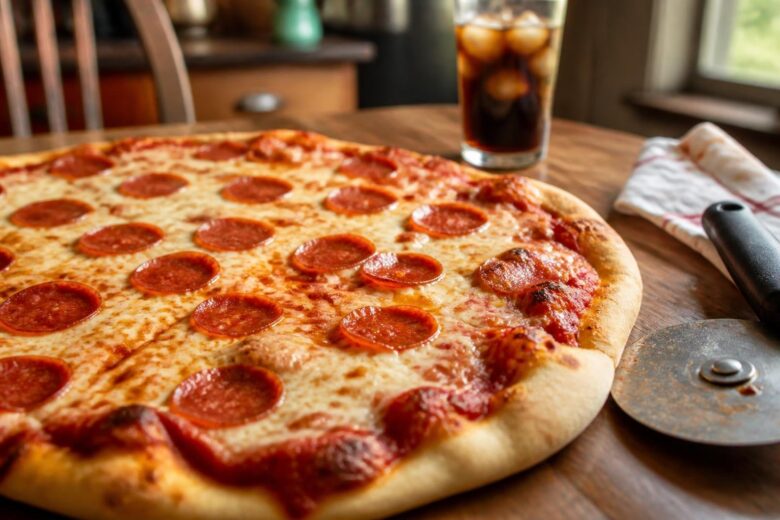
- Homemade pepperoni pizza
- Cheese breadsticks
- Pizza bagels
- Calzones
- Stromboli
- Dipping sauce for mozzarella sticks
- French bread pizza
- Pizza grilled cheese
- Pasta bake
One Friday night we used leftover sauce on English muffin pizzas for the kids and honestly they disappeared faster than regular pizza.
Make-Ahead Tips
This sauce is actually better when made ahead.
You can store it in the fridge for up to 5 days before using.
I usually make a double batch and freeze half.
You can also portion it into small containers so you only thaw what you need.
If frozen properly, it keeps well for about 3 months.

Storage & Reheating Tips
Refrigerator Storage
Store the sauce in airtight jars or containers in the fridge for up to 5 days.
The flavor gets a little deeper overnight.
Freezer Storage
Freeze cooled sauce in freezer-safe containers.
Leave a little space at the top because it expands slightly.
Reheating
Warm the sauce slowly in a saucepan over low heat.
Stir occasionally until heated through.
You can also microwave it in short bursts.
FAQs
Is Round Table Pizza Sauce Recipe sweet?
Not really.
It has a small amount of sugar, but the flavor is more savory and herby than sweet.
Can I use fresh tomatoes?
You can, but canned tomato sauce gives a more consistent texture and flavor.
Fresh tomatoes also take longer to cook down.
How thick should pizza sauce be?
It should spread easily but not run off the dough.
A slightly thick consistency works best.
Can I make this sauce without Parmesan?
Yes.
The Parmesan adds depth, but the sauce still tastes good without it.
Do I have to cook pizza sauce first?
For this recipe, yes.
A short simmer helps blend the seasonings and removes the canned tomato taste.
Can I use this for pasta?
You can.
It’s thicker and more seasoned than regular pasta sauce, but it works well for baked pasta dishes.
Final Thoughts
This Round Table Pizza Sauce Recipe has become one of those little homemade upgrades that actually makes a big difference.
Once the sauce tastes good, homemade pizza suddenly feels way more complete.
The first time I got the flavor close to what I wanted, everybody kept asking what was different about the pizza. It turned out the sauce was the main thing.
What worked better for me was keeping the recipe simple and focusing on balance instead of dumping in every spice in the cabinet.
The sauce should taste rich, slightly herby, a little garlicky, and smooth enough to spread easily.
And honestly, homemade pizza nights feel a lot more fun when the sauce actually tastes homemade too.
Even if your pizza comes out slightly uneven or the cheese slides off one slice, it still somehow tastes better than frozen pizza.
That’s part of the charm.

Round Table Pizza Sauce Recipe

Equipment
- Medium saucepan
- Wooden spoon or spatula
- Measuring cups
- Measuring spoons
- Knife
- Cutting board
- Small mixing bowl
- Can opener
- Storage container or mason jar
Ingredients
- 1 can 15 oz tomato sauce
- 1 can 6 oz tomato paste
- 3/4 cup water
- 2 tablespoons olive oil
- 1 teaspoon garlic powder
- 1 teaspoon onion powder
- 1 teaspoon dried oregano
- 1 teaspoon dried basil
- 1/2 teaspoon dried parsley
- 1/2 teaspoon black pepper
- 1 teaspoon salt
- 1 teaspoon sugar
- 1/4 teaspoon crushed red pepper flakes
- 1 teaspoon grated Parmesan cheese
Instructions
Step 1: Heat the Olive Oil
- Place a medium saucepan over low to medium heat.
- Add the olive oil and let it warm for about 30 seconds.
- You don’t want it smoking hot.
- The first time I rushed this part and burned the seasonings almost immediately, which made the whole sauce taste bitter.
Step 2: Add the Tomato Base
- Pour in the tomato sauce and tomato paste.
- Add the water and stir until smooth.
- At first it’ll look thick and kind of strange, but keep stirring until everything blends together.
- The texture should look smooth but still rich.
Step 3: Add the Seasonings
- Stir in the garlic powder, onion powder, oregano, basil, parsley, black pepper, salt, sugar, crushed red pepper flakes, and Parmesan cheese.
- Mix everything really well so the spices spread evenly.
- I noticed that if the tomato paste isn’t fully mixed in, little clumps can hold pockets of seasoning.
Step 4: Simmer the Sauce
- Reduce the heat to low.
- Let the sauce simmer gently for about 15 to 20 minutes.
- Stir every few minutes so the bottom doesn’t stick.
- The sauce should slowly darken a little and smell more savory as it cooks.
- You’ll notice the sharp canned tomato smell starts fading after about 10 minutes.
- That’s when it usually starts tasting way better.
Step 5: Taste and Adjust
- Taste the sauce carefully.
- If it tastes too acidic, add another tiny pinch of sugar.
- If you want more spice, add extra red pepper flakes.
- Sometimes I add a little extra oregano depending on what pizza toppings I’m using.
Step 6: Cool Before Using
- Let the sauce cool for at least 10 to 15 minutes before spreading it on pizza dough.
- Warm sauce can make pizza dough softer and harder to work with.
- The texture also thickens slightly as it cools.
Notes
- Let the sauce rest before using for better flavor.
- Use freshly opened dried herbs for stronger seasoning.
- A small amount of Parmesan adds extra depth.
- Spread sauce thinly for crispier pizza crust.
- Store extra sauce in small freezer containers.
- Add a splash of olive oil after cooking for richer flavor.
