


Intro
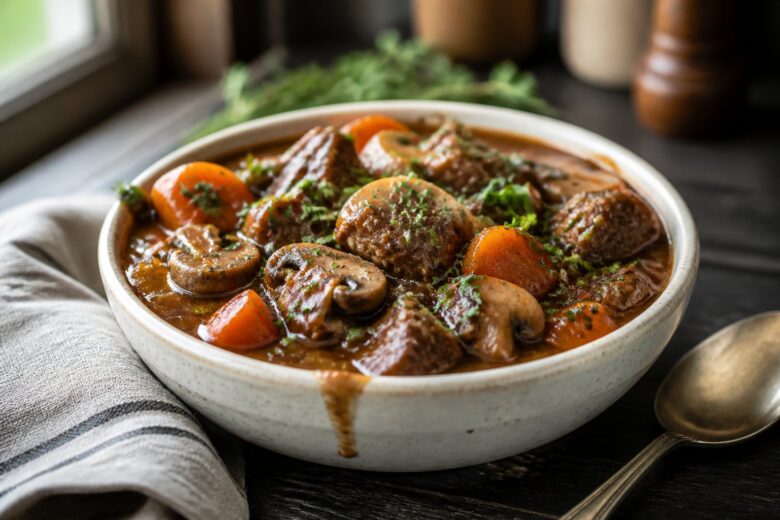
The first time I made this Mary Berry Beef Casserole Recipe, I honestly underestimated how good a simple beef casserole could be. I grew up eating plenty of slow-cooked beef dishes, but most of them were either too watery or way too heavy. This one landed somewhere right in the middle.
A few winters ago, I was looking for something hearty that didn’t require standing over the stove all evening. I had a package of beef chuck in the fridge, a few carrots that needed to be used, and a rainy Saturday afternoon ahead of me. That’s when I decided to try this classic casserole.
What surprised me most was how rich the flavor became with such basic ingredients. The beef turned fork-tender, the vegetables soaked up all those savory juices, and the gravy thickened into something that felt homemade in the best possible way.
I also learned a lesson the first time I made it. I rushed the browning step because I was hungry. Big mistake. The casserole was still good, but when I made it again and took the extra few minutes to properly brown the beef, the flavor was noticeably deeper.
Now it’s one of those meals I make when I want leftovers that actually taste better the next day.
Why This Recipe Works
There are a lot of beef casserole recipes out there, but this one works for some very practical reasons.
First, beef chuck becomes incredibly tender during the long cooking time. Instead of drying out, it slowly breaks down and develops a rich texture.
Second, the vegetables balance the dish. The carrots add a little sweetness while onions provide depth and help build flavor in the sauce.
Another thing I noticed is that the broth and tomato paste combination creates a gravy that’s flavorful without being too thick or overly rich.
The long simmer also gives everything enough time to blend together naturally. No single ingredient stands out too much. Every bite tastes balanced.
Most importantly, it’s made from ingredients you can find at nearly any grocery store in the United States.
Equipment Needed
You don’t need any fancy kitchen gear for this recipe.
- Large skillet or frying pan
- Large pot or Dutch oven
- Sharp knife
- Cutting board
- Wooden spoon or spatula
- Measuring cups
- Measuring spoons
- Mixing bowl
- Ladle
Recipe Card
Mary Berry Beef Casserole Recipe
Prep Time: 20 minutes
Cook Time: 2 hours 30 minutes
Total Time: 2 hours 50 minutes
Servings: 6
Cuisine: British Comfort Food
Course: Main Course
Calories: Approximately 510 calories per serving
Ingredients
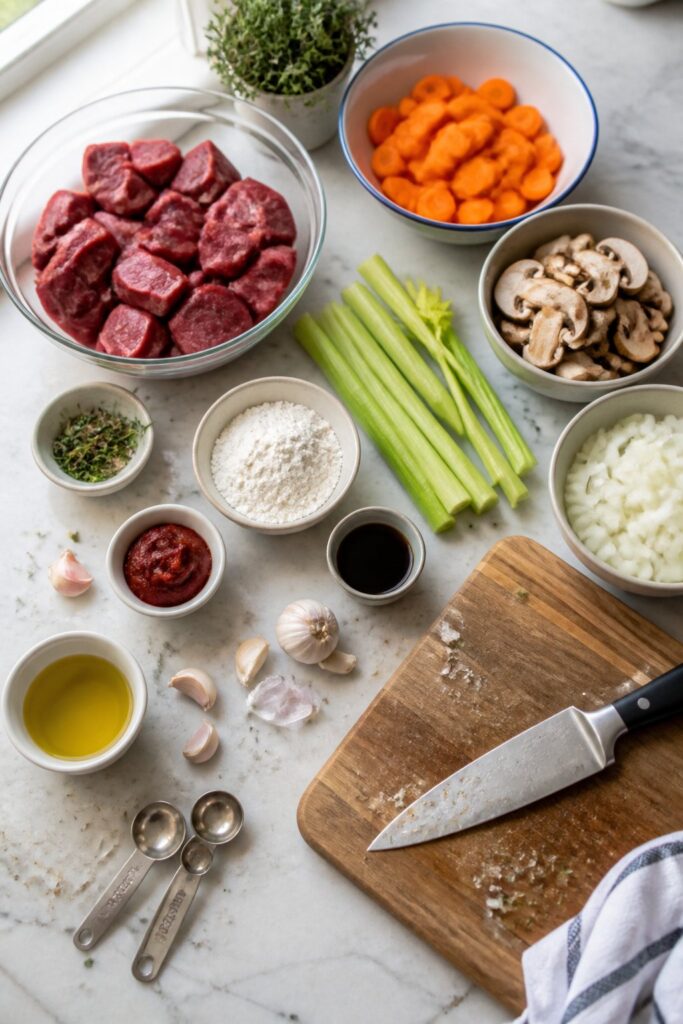
- 2 pounds beef chuck, cut into 1½-inch cubes
- 2 tablespoons all-purpose flour
- 1 teaspoon kosher salt
- ½ teaspoon black pepper
- 2 tablespoons olive oil
- 1 large yellow onion, diced
- 3 medium carrots, sliced
- 2 celery stalks, chopped
- 3 garlic cloves, minced
- 2 tablespoons tomato paste
- 3 cups beef broth
- 1 tablespoon Worcestershire sauce
- 1 teaspoon dried thyme
- 1 bay leaf
- 8 oz mushrooms, sliced
- 1 tablespoon butter
- Fresh parsley for garnish
Step-by-Step Instructions
Step 1: Prepare the Beef
Place the beef cubes in a large bowl. Sprinkle the flour, salt, and black pepper over the meat. Toss everything together until the beef is lightly coated.
The flour helps create a richer sauce later, so don’t skip it. The coating doesn’t need to look perfect. Just make sure most pieces are covered.
Step 2: Brown the Beef
Heat the olive oil in a large skillet over medium-high heat.
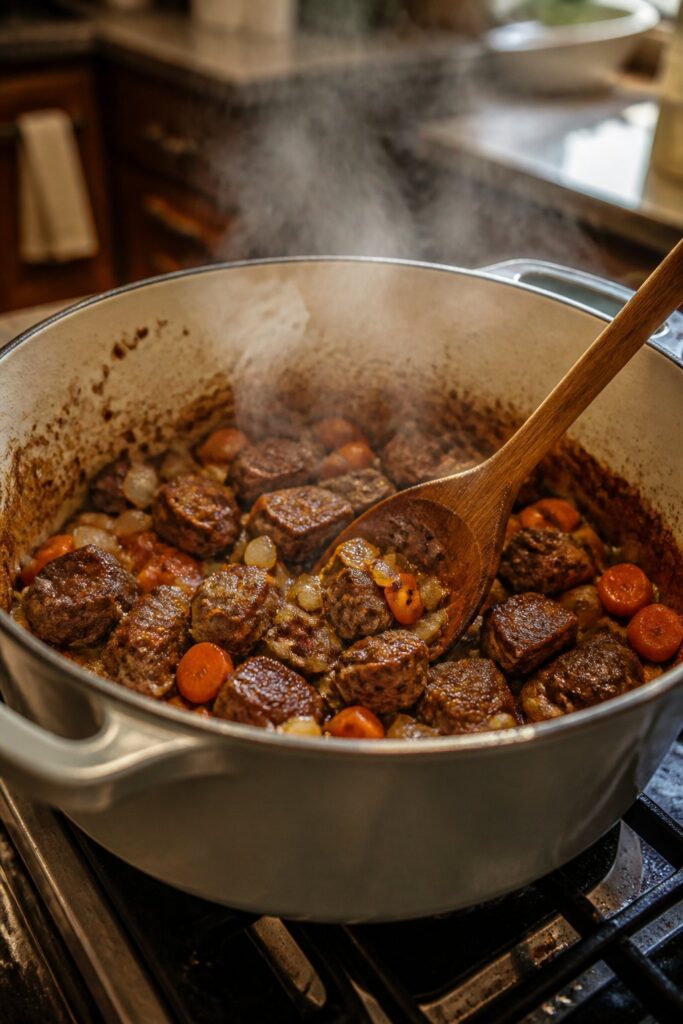
Add the beef in batches. Don’t crowd the pan. This is probably the most important step in the entire recipe. The beef should develop a deep brown crust rather than steam.
Each batch usually takes about 4 to 5 minutes. You’ll notice a rich, savory smell and dark brown bits forming on the bottom of the pan. That’s flavor.
Transfer the browned beef to your casserole pot or Dutch oven.
Step 3: Cook the Vegetables
Reduce the heat to medium.
Add the onion, carrots, and celery to the skillet. Stir occasionally for about 6 to 8 minutes until the onions become soft and slightly golden.
Add the garlic and cook for another minute.
The kitchen usually starts smelling amazing at this point. That’s always when my family starts wandering into the kitchen asking when dinner will be ready.
Step 4: Build the Flavor Base
Stir in the tomato paste.
Cook for about 2 minutes while stirring continuously. The paste should darken slightly in color.
What worked better for me was letting the tomato paste cook longer than I originally thought necessary. It removes that raw tomato flavor and adds depth to the casserole.
Step 5: Add the Liquid
Pour in the beef broth slowly while scraping up all the browned bits from the skillet.
Add Worcestershire sauce, thyme, and the bay leaf.
Bring the mixture to a gentle simmer.
Step 6: Combine Everything
Pour the vegetable and broth mixture over the beef in your casserole pot.
Stir well so everything is evenly distributed.
Cover with a lid.
Step 7: Slow Cook the Casserole
Cook on low heat for approximately 2 hours.
Stir once or twice during cooking if possible.
After about 90 minutes, you’ll notice the beef beginning to soften. By the end of the cooking time, it should be easy to pull apart with a fork.
The sauce should also become thicker and slightly glossy.
Step 8: Cook the Mushrooms
About 15 minutes before serving, melt the butter in a skillet.
Add the mushrooms and cook for 6 to 8 minutes until browned.
I used to throw the mushrooms directly into the casserole, but sautéing them separately gives them much better flavor.
Step 9: Finish the Dish
Add the cooked mushrooms to the casserole.
Stir gently and let everything cook together for another 10 minutes.
Taste and adjust seasoning if needed.
Remove the bay leaf before serving.
Sprinkle fresh parsley over the top.
Step 10: Serve
Ladle the casserole into bowls while it’s hot.
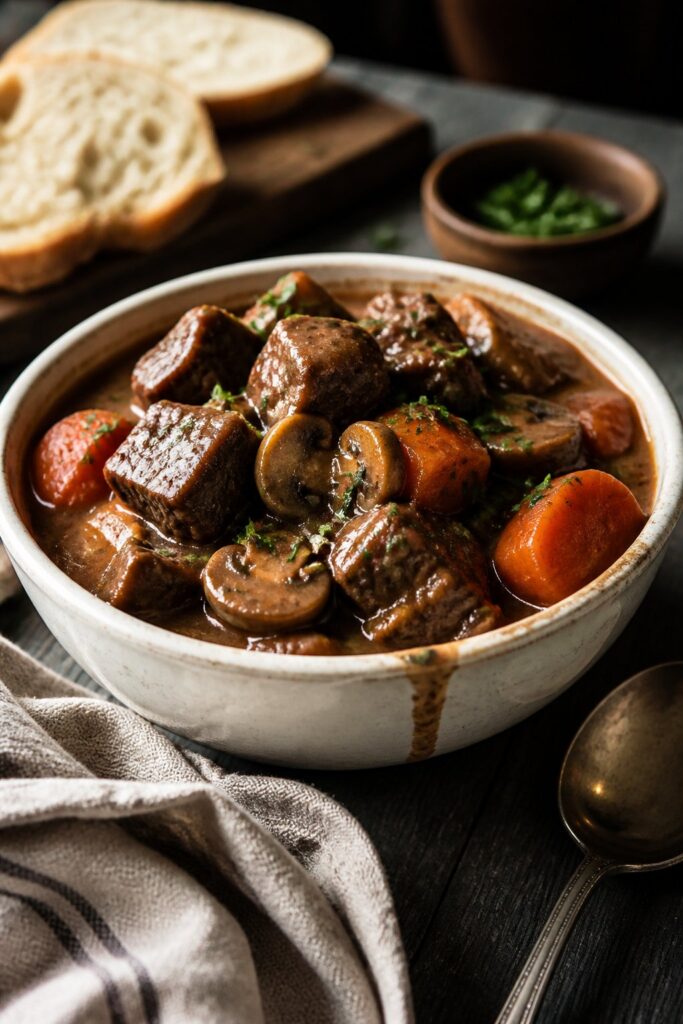
The beef should be tender, the vegetables soft but not mushy, and the gravy rich enough to coat a spoon.
Common Mistakes to Avoid
Not Browning the Beef Properly
This is probably the biggest mistake. If the beef isn’t browned, the casserole can taste flat.
Overcrowding the Pan
Too much beef in the skillet at once causes steaming instead of browning.
Using Lean Beef
Lean cuts often become dry during long cooking. Beef chuck works much better.
Cooking at Too High a Temperature
A gentle simmer creates tender beef. Rapid boiling can make the meat tough.
Adding Mushrooms Too Early
Mushrooms release moisture as they cook. Adding them near the end helps preserve their texture.
Underseasoning
Long cooking can mellow flavors. Always taste before serving.
Pro Tips
- Cut beef into evenly sized chunks for consistent cooking.
- Make the casserole a day ahead if possible.
- Let the dish rest for 10 minutes before serving.
- Use low-sodium broth so you can control the salt level.
- Fresh parsley brightens the finished dish.
- If the gravy seems thin, simmer uncovered for 10 to 15 minutes.
- If it becomes too thick, add a splash of broth.
Variations
Add Potatoes
Add 2 cups diced Yukon Gold potatoes during the last hour of cooking.
Red Wine Version
Replace 1 cup of broth with dry red wine for deeper flavor.
Extra Vegetable Version
Add peas, parsnips, or green beans near the end.
Herb Variation
Fresh rosemary pairs nicely with the beef.
Slow Cooker Method
Brown the beef first, then transfer everything to a slow cooker.
Cook on low for 7 to 8 hours.
Gluten-Free Option
Replace the flour with a gluten-free flour blend or cornstarch.
Serving Ideas
- Creamy mashed potatoes
- Buttered egg noodles
- Steamed green beans
- Roasted Brussels sprouts
- Warm dinner rolls
- Garlic bread
- Simple garden salad
- Buttered peas
Make-Ahead Tips
This Mary Berry Beef Casserole Recipe is actually one of those meals that improves overnight.
Prepare the entire casserole up to two days ahead and refrigerate it after cooling completely.
The flavors continue to develop as it rests.
If you’re hosting family or friends, making it the day before removes a lot of stress from dinner preparation.
You can also chop all vegetables a day ahead and store them in airtight containers.
The beef can be trimmed and cubed in advance as well.
Storage & Reheating Tips
Refrigerator
Store leftovers in an airtight container for up to 4 days.
Freezer
Freeze portions for up to 3 months.
I usually freeze individual servings because they’re easy to thaw for quick lunches.
Reheating on the Stove
Place the casserole in a pot over medium-low heat.
Add a splash of broth if needed.
Stir occasionally until heated through.
Reheating in the Microwave
Use a microwave-safe bowl.
Heat in 1-minute intervals, stirring between each round.
Thawing
Move frozen casserole to the refrigerator overnight before reheating.
Frequently Asked Questions
Can I make this Mary Berry Beef Casserole Recipe in a slow cooker?
Yes. Brown the beef first, then transfer everything to a slow cooker and cook on low for 7 to 8 hours.
What is the best cut of beef for casserole?
Beef chuck is usually the best option because it becomes tender during slow cooking and has great flavor.
Can I freeze beef casserole?
Absolutely. Let it cool completely before freezing. It keeps well for up to 3 months.
Why is my casserole meat still tough?
The beef probably needs more cooking time. Tough beef often becomes tender if cooked longer at a low temperature.
Can I add potatoes directly to the casserole?
Yes. Add diced potatoes during the last hour of cooking so they don’t become overly soft.
Does this recipe taste better the next day?
In my experience, yes. The flavors seem to blend together even more after resting overnight in the refrigerator.
Final Thoughts
This Mary Berry Beef Casserole Recipe has become one of my favorite cold-weather dinners because it delivers exactly what I want from comfort food: tender beef, rich gravy, and simple ingredients that work together beautifully.
The first time I made it, I expected a decent weeknight meal. What I got was a recipe that stayed in my regular rotation for years. I noticed that every time I make it, the leftovers disappear faster than expected, which is usually a good sign.
If you’re looking for a reliable Mary Berry Beef Casserole Recipe that feels homemade, satisfying, and easy enough for a regular cook, this one is worth keeping around. Take your time with the browning step, let the casserole simmer gently, and don’t be surprised if it tastes even better the next day.
That’s usually what happens in my kitchen.
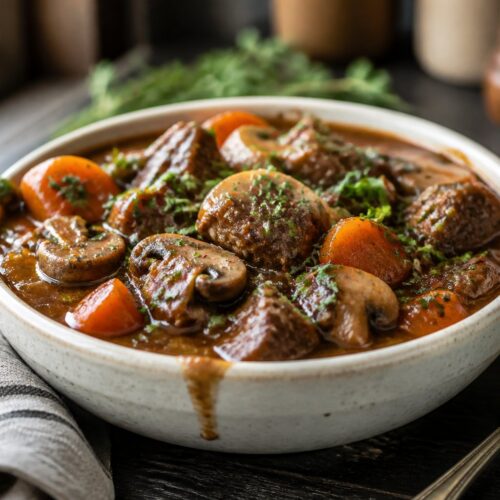
Mary Berry Beef Casserole Recipe

Equipment
- Large skillet or frying pan
- Large pot or Dutch oven
- Sharp knife
- Cutting board
- Wooden spoon or spatula
- Measuring cups
- Measuring spoons
- Mixing bowl
- Ladle
Ingredients
- 2 pounds beef chuck cut into 1½-inch cubes
- 2 tablespoons all-purpose flour
- 1 teaspoon kosher salt
- ½ teaspoon black pepper
- 2 tablespoons olive oil
- 1 large yellow onion diced
- 3 medium carrots sliced
- 2 celery stalks chopped
- 3 garlic cloves minced
- 2 tablespoons tomato paste
- 3 cups beef broth
- 1 tablespoon Worcestershire sauce
- 1 teaspoon dried thyme
- 1 bay leaf
- 8 oz mushrooms sliced
- 1 tablespoon butter
- Fresh parsley for garnish
Instructions
Step 1: Prepare the Beef
- Place the beef cubes in a large bowl. Sprinkle the flour, salt, and black pepper over the meat. Toss everything together until the beef is lightly coated.
- The flour helps create a richer sauce later, so don’t skip it. The coating doesn’t need to look perfect. Just make sure most pieces are covered.
Step 2: Brown the Beef
- Heat the olive oil in a large skillet over medium-high heat.
- Add the beef in batches. Don’t crowd the pan. This is probably the most important step in the entire recipe. The beef should develop a deep brown crust rather than steam.
- Each batch usually takes about 4 to 5 minutes. You’ll notice a rich, savory smell and dark brown bits forming on the bottom of the pan. That’s flavor.
- Transfer the browned beef to your casserole pot or Dutch oven.
Step 3: Cook the Vegetables
- Reduce the heat to medium.
- Add the onion, carrots, and celery to the skillet. Stir occasionally for about 6 to 8 minutes until the onions become soft and slightly golden.
- Add the garlic and cook for another minute.
- The kitchen usually starts smelling amazing at this point. That’s always when my family starts wandering into the kitchen asking when dinner will be ready.
Step 4: Build the Flavor Base
- Stir in the tomato paste.
- Cook for about 2 minutes while stirring continuously. The paste should darken slightly in color.
- What worked better for me was letting the tomato paste cook longer than I originally thought necessary. It removes that raw tomato flavor and adds depth to the casserole.
Step 5: Add the Liquid
- Pour in the beef broth slowly while scraping up all the browned bits from the skillet.
- Add Worcestershire sauce, thyme, and the bay leaf.
- Bring the mixture to a gentle simmer.
Step 6: Combine Everything
- Pour the vegetable and broth mixture over the beef in your casserole pot.
- Stir well so everything is evenly distributed.
- Cover with a lid.
Step 7: Slow Cook the Casserole
- Cook on low heat for approximately 2 hours.
- Stir once or twice during cooking if possible.
- After about 90 minutes, you’ll notice the beef beginning to soften. By the end of the cooking time, it should be easy to pull apart with a fork.
- The sauce should also become thicker and slightly glossy.
Step 8: Cook the Mushrooms
- About 15 minutes before serving, melt the butter in a skillet.
- Add the mushrooms and cook for 6 to 8 minutes until browned.
- I used to throw the mushrooms directly into the casserole, but sautéing them separately gives them much better flavor.
Step 9: Finish the Dish
- Add the cooked mushrooms to the casserole.
- Stir gently and let everything cook together for another 10 minutes.
- Taste and adjust seasoning if needed.
- Remove the bay leaf before serving.
- Sprinkle fresh parsley over the top.
Step 10: Serve
- Ladle the casserole into bowls while it’s hot.
- The beef should be tender, the vegetables soft but not mushy, and the gravy rich enough to coat a spoon.
Notes
- Cut beef into evenly sized chunks for consistent cooking.
- Make the casserole a day ahead if possible.
- Let the dish rest for 10 minutes before serving.
- Use low-sodium broth so you can control the salt level.
- Fresh parsley brightens the finished dish.
- If the gravy seems thin, simmer uncovered for 10 to 15 minutes.
- If it becomes too thick, add a splash of broth.
