


Intro
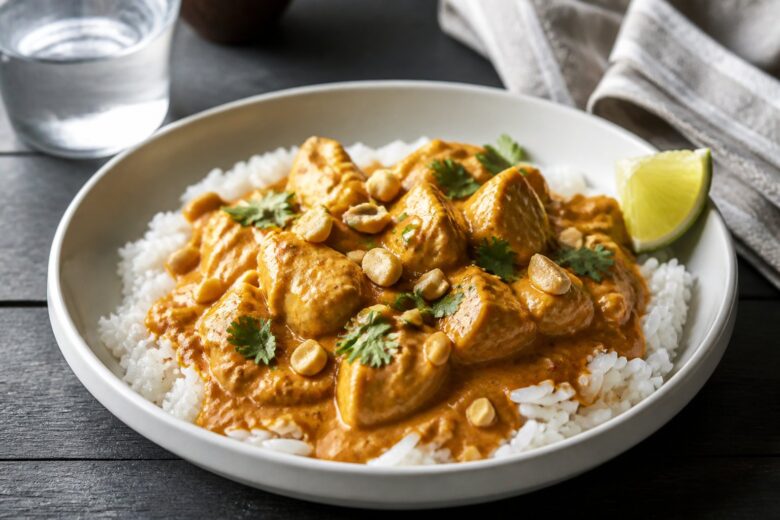
The first time I tried making a Mary Berry Panang Chicken Recipe, I was honestly a little nervous. Panang curry has such a rich flavor that I assumed it would be complicated. I pictured a long ingredient list and lots of hard-to-find items.
Turns out, it was much simpler than I expected.
What surprised me most was how quickly everything came together. The creamy coconut sauce, tender chicken, and warm spices made the whole kitchen smell amazing. My family actually wandered into the kitchen asking when dinner would be ready, which doesn’t always happen.
I did make one mistake the first time. I added too much curry paste because I thought more would mean better flavor. It definitely didn’t. The sauce became much spicier than I planned. What worked better for me was starting with less paste and adjusting later.
Now this Mary Berry Panang Chicken Recipe has become one of my favorite homemade curry dinners. It’s comforting, rich, and surprisingly easy for a weeknight meal.
Why This Recipe Works
There are several reasons this recipe consistently turns out well:
- Coconut milk creates a creamy sauce without needing heavy cream.
- Chicken stays tender while absorbing the curry flavors.
- Panang curry paste provides depth without requiring dozens of spices.
- A touch of brown sugar balances the savory and spicy notes.
- Peanut butter adds richness and helps thicken the sauce.
- Bell peppers bring color and freshness.
- Everything cooks in one pan, making cleanup easier.
I noticed the flavors taste even better after sitting for a few minutes before serving. The sauce seems to settle and become richer.
Equipment Needed
You only need basic kitchen tools:
- Large skillet or sauté pan
- Medium pot for rice
- Sharp knife
- Cutting board
- Wooden spoon or spatula
- Measuring cups
- Measuring spoons
- Mixing bowl
Recipe Card
Mary Berry Panang Chicken Recipe Summary
Prep Time: 15 minutes
Cook Time: 25 minutes
Total Time: 40 minutes
Servings: 4
Cuisine: Thai-Inspired
Course: Dinner
Calories: Approximately 520 calories per serving
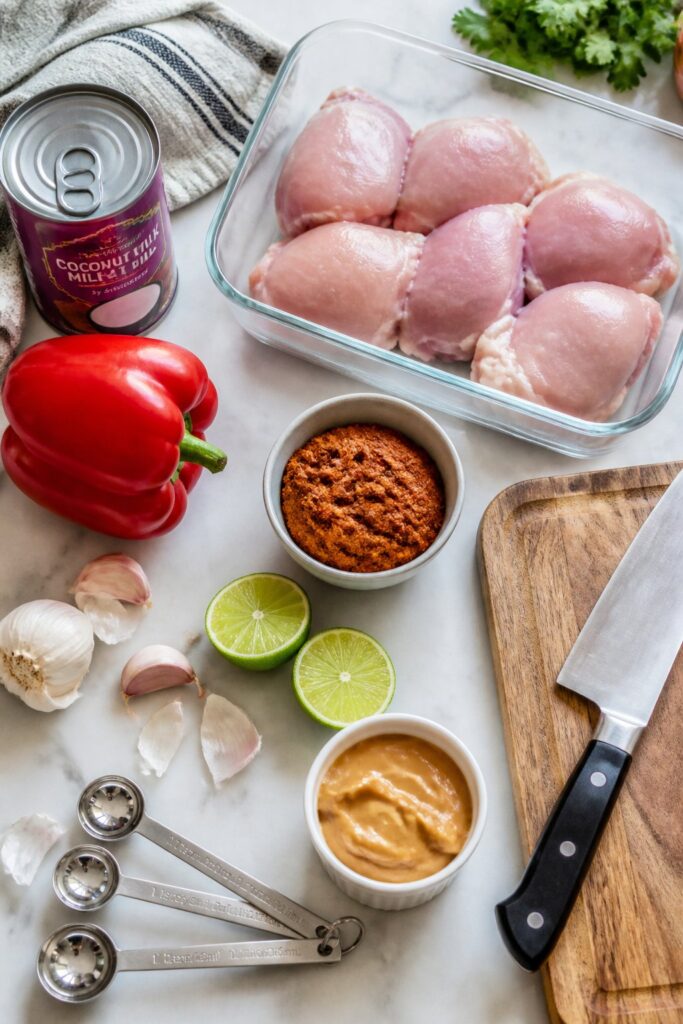
Ingredients
For the Panang Chicken
- 1½ lbs boneless skinless chicken thighs, cut into bite-sized pieces
- 1 tablespoon vegetable oil
- 1 medium onion, thinly sliced
- 1 red bell pepper, sliced
- 3 garlic cloves, minced
- 2 tablespoons Panang curry paste
- 1 can (13.5 oz) full-fat coconut milk
- 2 tablespoons creamy peanut butter
- 1 tablespoon brown sugar
- 1 tablespoon fish sauce
- 1 tablespoon fresh lime juice
- ½ teaspoon salt
- ¼ teaspoon black pepper
For Serving
- 3 cups cooked jasmine rice
- Fresh cilantro
- Lime wedges
- Chopped peanuts (optional)
Step-by-Step Instructions
Step 1: Prepare the Ingredients
Before turning on the stove, slice the onion and bell pepper. Mince the garlic and cut the chicken into evenly sized pieces.
Having everything ready makes the cooking process much smoother because the curry comes together fairly quickly.
Step 2: Cook the Chicken
Heat the vegetable oil in a large skillet over medium-high heat.
Add the chicken pieces and cook for about 5 to 6 minutes, stirring occasionally. The chicken should begin turning golden around the edges but doesn’t need to be fully cooked at this stage.
The aroma starts building right away, especially once the chicken begins browning.
Transfer the chicken to a plate and set aside.
Step 3: Sauté the Vegetables
Using the same skillet, add the sliced onion and bell pepper.
Cook for about 4 minutes, stirring occasionally, until the vegetables begin softening. The onions should look slightly translucent.
Add the minced garlic and cook for another 30 seconds.
You’ll know it’s ready when the garlic becomes fragrant but not browned.
Step 4: Toast the Curry Paste
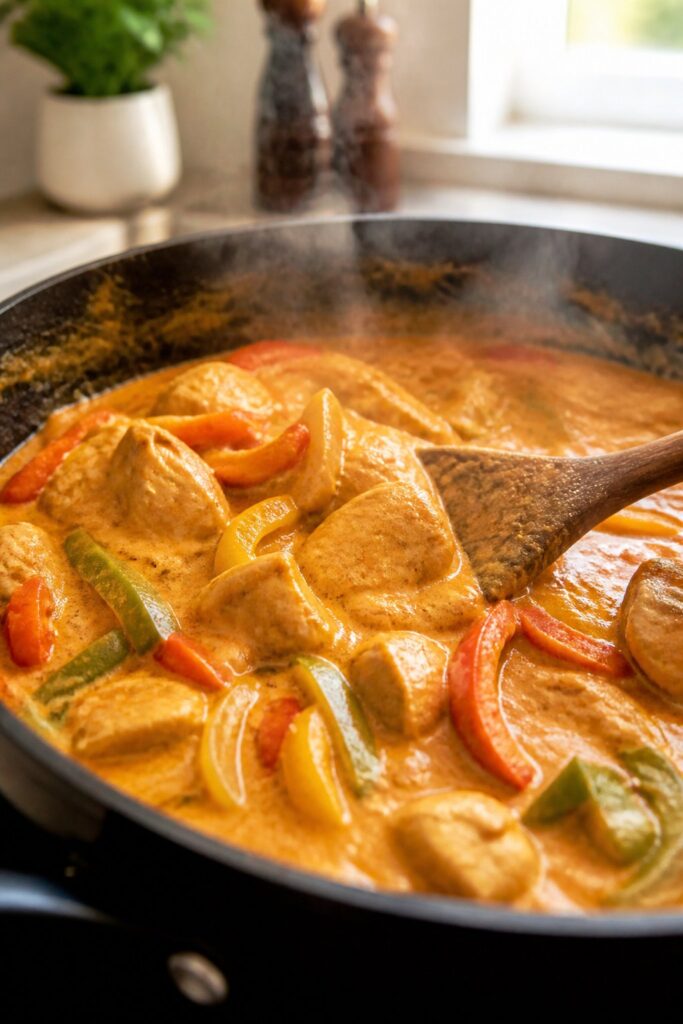
Add the Panang curry paste directly into the skillet.
Stir constantly for about 1 minute. This helps release the oils and flavors from the paste.
The first time I made this recipe, I skipped this step and added the coconut milk immediately. The flavor wasn’t nearly as developed.
Step 5: Build the Sauce
Pour in the coconut milk and stir well.
Add the peanut butter, brown sugar, fish sauce, salt, and pepper.
Continue stirring until the peanut butter fully dissolves into the sauce.
At this point, the curry should start looking smooth, creamy, and slightly reddish-orange.
Step 6: Simmer Everything Together
Return the chicken to the skillet.
Reduce the heat to medium-low and allow everything to simmer gently for 12 to 15 minutes.
The sauce will slowly thicken while the chicken finishes cooking.
Stir occasionally to prevent sticking.
When done, the chicken should reach an internal temperature of 165°F and the sauce should coat the back of a spoon.
Step 7: Finish with Lime Juice
Remove the skillet from the heat.
Stir in the fresh lime juice.
This final step brightens the entire dish and balances the richness of the coconut milk.
I noticed this small addition makes a much bigger difference than you’d expect.
Step 8: Serve
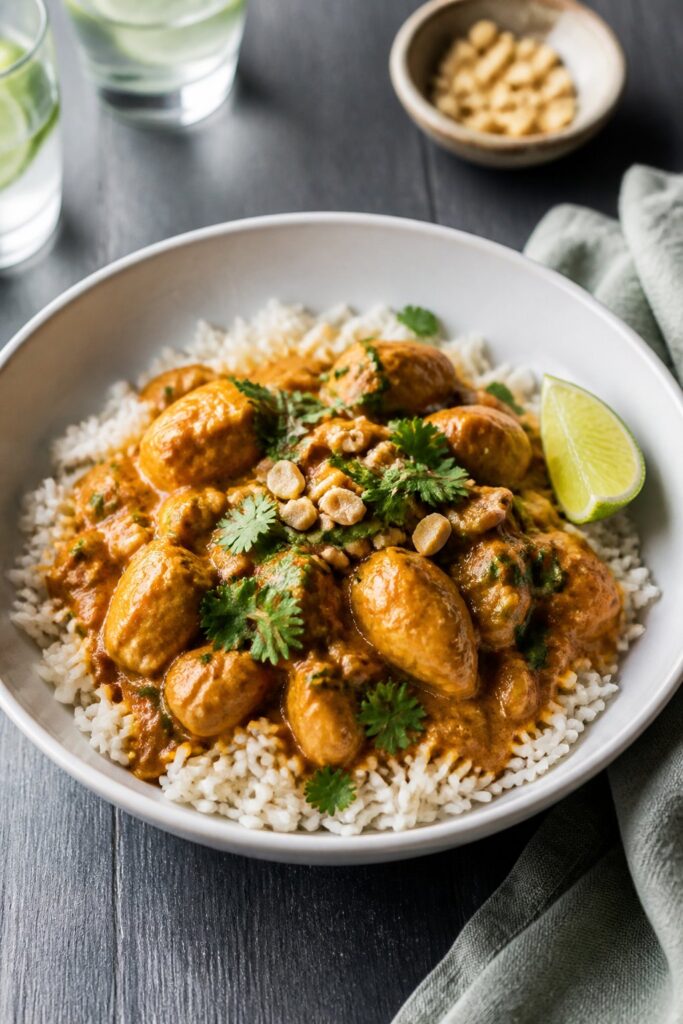
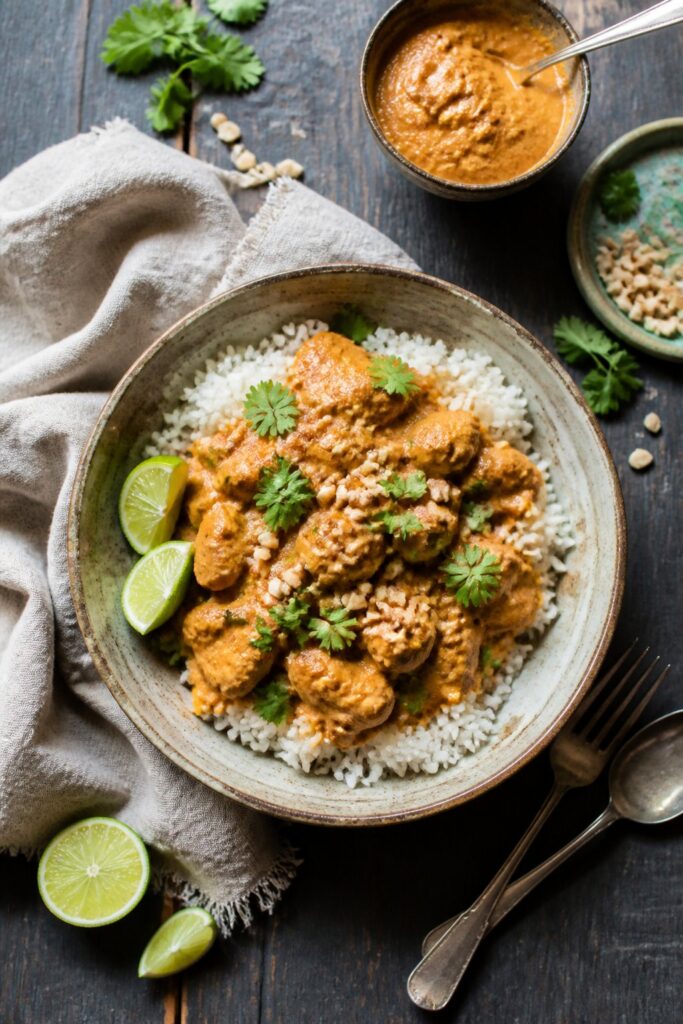
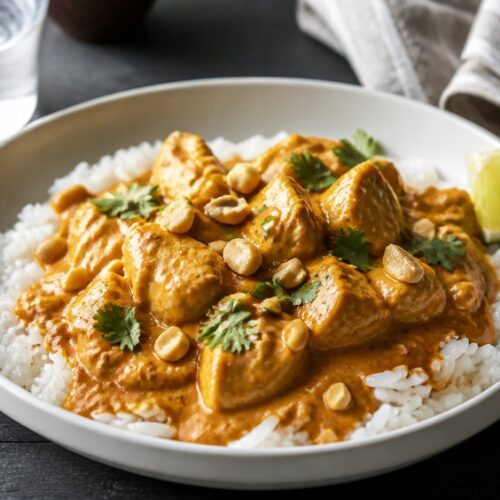
Spoon the Panang chicken over warm jasmine rice.
Garnish with cilantro, chopped peanuts, and lime wedges if desired.
Serve immediately while the sauce is still creamy and hot.
Common Mistakes to Avoid
Using Low-Fat Coconut Milk
The sauce won’t be nearly as creamy. Full-fat coconut milk creates the best texture.
Overcooking the Chicken
Chicken thighs are forgiving, but cooking too long can still make them less tender.
Adding Too Much Curry Paste
Start with the recommended amount and adjust later if needed.
Skipping the Lime Juice
The curry can taste overly rich without the acidity from fresh lime.
Boiling the Sauce Aggressively
A gentle simmer works best. High heat can cause the coconut milk to separate.
Pro Tips
- Use chicken thighs instead of breasts for maximum tenderness.
- Let the curry rest for 5 minutes before serving.
- Fresh lime juice tastes much better than bottled.
- Add extra vegetables if you like a heartier meal.
- Stir frequently during simmering to maintain a smooth sauce.
- Taste the sauce before serving and adjust sweetness or salt if needed.
What worked better for me was adding the lime juice after removing the pan from the heat. The flavor stays brighter that way.
Variations
Vegetable Panang Curry
Replace chicken with broccoli, carrots, mushrooms, and snap peas.
Shrimp Panang Curry
Use peeled shrimp and reduce the cooking time significantly.
Spicy Version
Add an extra tablespoon of curry paste or a pinch of red pepper flakes.
Low-Carb Version
Serve over cauliflower rice instead of jasmine rice.
Extra Peanut Flavor
Increase the peanut butter to 3 tablespoons for an even richer sauce.
Serving Ideas
- Jasmine rice
- Coconut rice
- Steamed broccoli
- Garlic green beans
- Cucumber salad
- Stir-fried vegetables
- Thai-style slaw
- Roasted carrots
- Fresh spring rolls
- Naan bread
Make-Ahead Tips
This Mary Berry Panang Chicken Recipe works very well for meal prep.
You can chop the vegetables and chicken up to a day ahead. Store everything separately in airtight containers.
The sauce ingredients can also be measured and prepared in advance.
In fact, I think the finished curry tastes even better the next day because the flavors continue to develop overnight.
Storage & Reheating Tips
Refrigerator
Store leftovers in an airtight container for up to 4 days.
Freezer
Freeze cooled curry in freezer-safe containers for up to 2 months.
Reheating
Reheat gently in a skillet over medium-low heat.
Add a splash of coconut milk or water if the sauce becomes too thick.
Microwave reheating works as well, but stir halfway through for even heating.
Frequently Asked Questions
What is Panang curry?
Panang curry is a rich Thai-style curry known for its creamy coconut base and slightly sweet, nutty flavor profile.
Can I use chicken breast instead of chicken thighs?
Yes. Chicken breast works fine, but be careful not to overcook it.
Is Panang curry spicy?
It usually has mild to medium heat. The spice level depends on the curry paste used.
Can I make this recipe dairy-free?
Yes. This recipe is naturally dairy-free since the creaminess comes from coconut milk.
What vegetables work best in Panang curry?
Bell peppers, broccoli, carrots, snap peas, zucchini, and mushrooms all work well.
Can I make this ahead of time?
Absolutely. Many people find the flavors improve after resting overnight in the refrigerator.
Final Thoughts
This Mary Berry Panang Chicken Recipe is one of those dinners that feels a little special without requiring a lot of extra work. The creamy coconut sauce, tender chicken, and balanced curry flavors make it incredibly satisfying while still being simple enough for a regular weeknight.
The first time I made it, I thought it might be a once-in-a-while recipe. Instead, it’s become one of those meals that keeps finding its way back onto the dinner menu.
If you’re looking for a comforting homemade curry that’s packed with flavor and doesn’t take all evening to make, this recipe is definitely worth trying. Don’t forget the fresh lime juice at the end—it really ties everything together.
Mary Berry Panang Chicken Recipe

Equipment
- Large skillet or saute pan
- Medium pot for rice
- Sharp knife
- Cutting board
- Wooden spoon or spatula
- Measuring cups
- Measuring spoons
- Mixing bowl
Ingredients
For the Panang Chicken
- 1½ lbs boneless skinless chicken thighs cut into bite-sized pieces
- 1 tablespoon vegetable oil
- 1 medium onion thinly sliced
- 1 red bell pepper sliced
- 3 garlic cloves minced
- 2 tablespoons Panang curry paste
- 1 can 13.5 oz full-fat coconut milk
- 2 tablespoons creamy peanut butter
- 1 tablespoon brown sugar
- 1 tablespoon fish sauce
- 1 tablespoon fresh lime juice
- ½ teaspoon salt
- ¼ teaspoon black pepper
For Serving
- 3 cups cooked jasmine rice
- Fresh cilantro
- Lime wedges
- Chopped peanuts optional
Instructions
Step 1: Prepare the Ingredients
- Before turning on the stove, slice the onion and bell pepper. Mince the garlic and cut the chicken into evenly sized pieces.
- Having everything ready makes the cooking process much smoother because the curry comes together fairly quickly.
Step 2: Cook the Chicken
- Heat the vegetable oil in a large skillet over medium-high heat.
- Add the chicken pieces and cook for about 5 to 6 minutes, stirring occasionally. The chicken should begin turning golden around the edges but doesn’t need to be fully cooked at this stage.
- The aroma starts building right away, especially once the chicken begins browning.
- Transfer the chicken to a plate and set aside.
Step 3: Sauté the Vegetables
- Using the same skillet, add the sliced onion and bell pepper.
- Cook for about 4 minutes, stirring occasionally, until the vegetables begin softening. The onions should look slightly translucent.
- Add the minced garlic and cook for another 30 seconds.
- You’ll know it’s ready when the garlic becomes fragrant but not browned.
Step 4: Toast the Curry Paste
- Add the Panang curry paste directly into the skillet.
- Stir constantly for about 1 minute. This helps release the oils and flavors from the paste.
- The first time I made this recipe, I skipped this step and added the coconut milk immediately. The flavor wasn’t nearly as developed.
Step 5: Build the Sauce
- Pour in the coconut milk and stir well.
- Add the peanut butter, brown sugar, fish sauce, salt, and pepper.
- Continue stirring until the peanut butter fully dissolves into the sauce.
- At this point, the curry should start looking smooth, creamy, and slightly reddish-orange.
Step 6: Simmer Everything Together
- Return the chicken to the skillet.
- Reduce the heat to medium-low and allow everything to simmer gently for 12 to 15 minutes.
- The sauce will slowly thicken while the chicken finishes cooking.
- Stir occasionally to prevent sticking.
- When done, the chicken should reach an internal temperature of 165°F and the sauce should coat the back of a spoon.
Step 7: Finish with Lime Juice
- Remove the skillet from the heat.
- Stir in the fresh lime juice.
- This final step brightens the entire dish and balances the richness of the coconut milk.
- I noticed this small addition makes a much bigger difference than you’d expect.
Step 8: Serve
- Spoon the Panang chicken over warm jasmine rice.
- Garnish with cilantro, chopped peanuts, and lime wedges if desired.
- Serve immediately while the sauce is still creamy and hot.
Notes
- Use chicken thighs instead of breasts for maximum tenderness.
- Let the curry rest for 5 minutes before serving.
- Fresh lime juice tastes much better than bottled.
- Add extra vegetables if you like a heartier meal.
- Stir frequently during simmering to maintain a smooth sauce.
- Taste the sauce before serving and adjust sweetness or salt if needed.
